CSRD Compliance: A Guide for European Businesses
A guide to the CSRD directive, updated for the 2026 Omnibus reform: who has to report now and from when, what the simplified ESRS ask for, and how to get your energy and water data in order.

1. Introduction to the CSRD Directive
The Corporate Sustainability Reporting Directive (CSRD) is one of the most ambitious regulations introduced by the European Union to increase transparency and accountability for sustainable development. It builds upon the Non-Financial Reporting Directive (NFRD) but significantly expands its scope and level of detail.
CSRD requires detailed reporting on environment, social, and governance (ESG) matters, providing a standardized approach to measuring and reporting performance. Its main objectives are:
- Transparency: Ensuring that companies disclose comparable, reliable, and verifiable information about sustainability.
- Accountability: Encouraging companies to integrate sustainable practices into their operations.
- Alignment: Supporting the EU's broader goals under the European Green Deal, particularly the objective of achieving climate neutrality by 2050.
CSRD began to apply in 2024, and its reach has since been cut back sharply. In April 2025 the EU's "stop-the-clock" directive postponed the second and third reporting waves. In February 2026 the Council adopted the Omnibus I Directive, which entered into force in March 2026: it limits CSRD to the very largest companies and simplifies the reporting standards. The goal is unchanged, to make sustainability reporting as dependable as financial reporting. What has changed is who has to report, when, and how much.
2. Who Does CSRD Affect Now?
The Omnibus I Directive replaced the original thresholds, which would have covered around 50,000 companies, with much higher ones. Most of those companies no longer have to report under CSRD.
Thresholds After Omnibus I
CSRD now applies to:
- EU companies with more than 1,000 employees and more than €450 million in net annual turnover, on an individual or consolidated basis. Both thresholds must be exceeded.
- Non-EU groups with more than €450 million in net turnover in the EU in each of the last two financial years, provided they have an EU subsidiary or branch with more than €200 million in net turnover.
Listed SMEs, which were due to start reporting later, are no longer in scope at all.
Timing
- Financial years starting on or after 1 January 2027: the new thresholds apply, so the first reports from companies that were not reporting before are due in 2028.
- Companies that already reported from 2024: many fall below the new thresholds. Member States may exempt them for financial years 2025 and 2026; if a country does not, they keep reporting until the new criteria apply.
- Non-EU groups: reporting starts with the 2028 financial year.
- National law: Member States have 12 months from entry into force, until March 2027, to transpose the changes, so check the rules in each country where you operate.
Important Supply Chain Implications
Fewer companies must report, but those that do still need data from their suppliers, particularly for Scope 3 emissions. Omnibus I protects smaller businesses here: a reporting company cannot ask a supplier with up to 1,000 employees for more than the Commission's voluntary standard for SMEs (VSME), and contract terms that demand more do not bind the supplier. If a customer asks for your data, the VSME is the format to prepare.
3. Key Challenges and Opportunities Under CSRD
Challenges
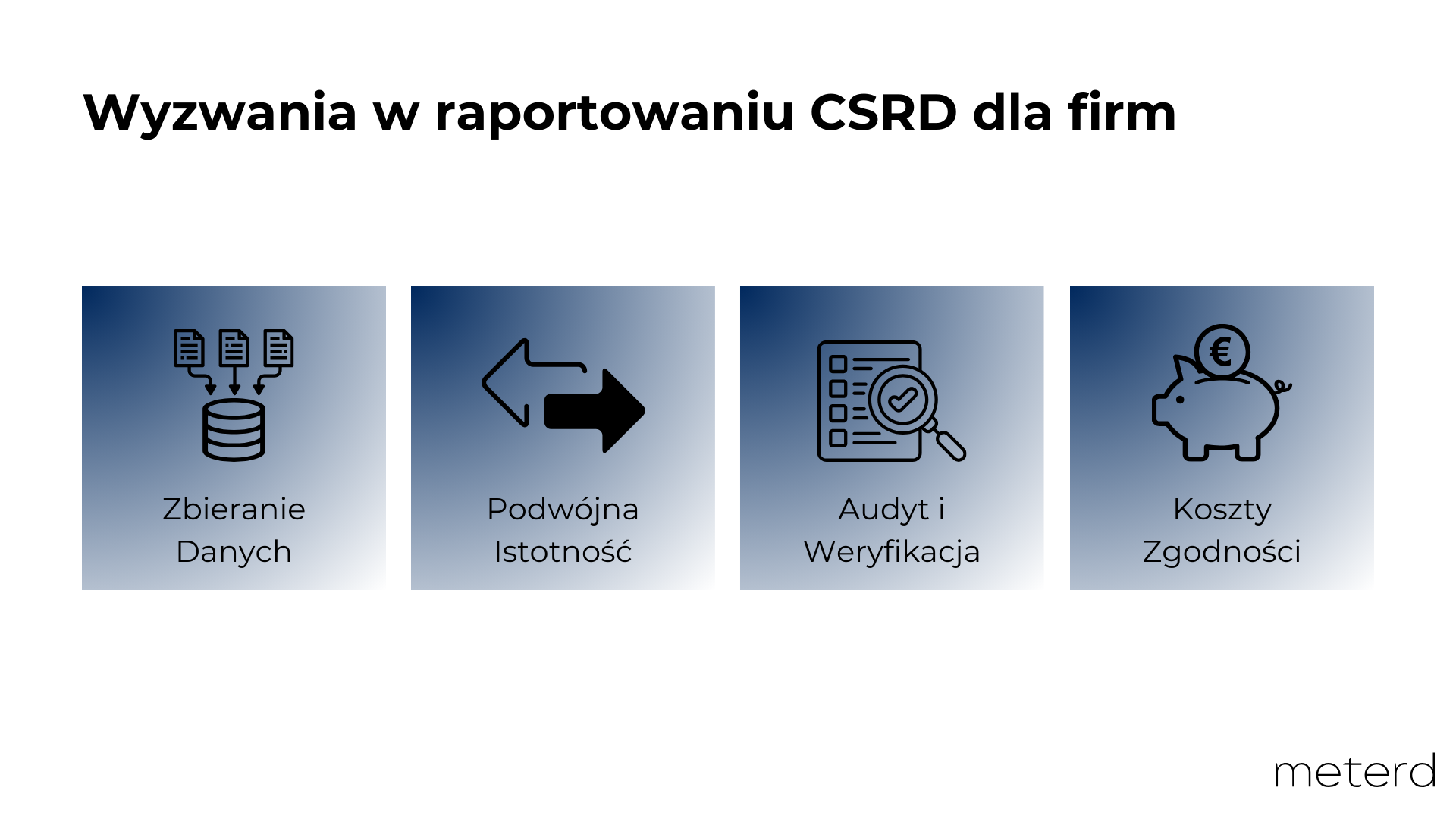
- Data Collection: Companies must collect detailed and accurate data across all areas of their operations and supply chains.
- Double Materiality Analysis: Companies must address both how their activities impact sustainability and how sustainability issues affect their business.
- Audit and Verification: Reports need independent assurance. The planned move to reasonable assurance was dropped, so limited assurance remains, but it still complicates the process and raises the requirements.
- Compliance Costs: The simplified standards ease the burden, but companies in scope still need to invest in systems, technology and people to comply.
Opportunities
- Operational Optimization: CSRD compliance encourages companies to identify inefficiencies and adopt resource optimization strategies. Example: A manufacturing company identifies excessive energy consumption during compliance reviews and reduces costs by 20% by implementing renewable energy solutions.
- Increased Market Trust: Transparent ESG reporting fosters trust among investors, customers, and regulators.
- Innovation and Leadership: Early adoption of the directive can position companies as sustainability leaders in their industries.
4. CSRD Reporting Fundamentals and ESRS Area Breakdown
4.1 Core CSRD Reporting Principles
- Double Materiality Analysis: Companies must disclose both their external impact on the environment and society and internal risks arising from sustainability issues.
- Independent Verification: Reports must be assured by an external auditor or assurance provider (limited assurance).
- Standardized Framework: Reports must follow the European Sustainability Reporting Standards (ESRS), which are being simplified.
4.2 The Simplified ESRS
In December 2025 EFRAG delivered a simplified version of the ESRS. It removes the voluntary datapoints and cuts the required ones, where material, by around 60%, and the sector-specific standards that were once planned are no longer part of the framework. The European Commission adopts the revised standards as a delegated act, so check the version that applies to your reporting year. The topics below remain, with fewer datapoints behind each of them.
4.3 ESRS Area Breakdown
Environment (ESRS E):
- E1 - Climate Change: Disclosed information includes Scope 1 (direct), Scope 2 (indirect energy), and Scope 3 (value chain) emissions. Example: A logistics company reports emissions from delivery vehicles and energy used to operate warehouses.
- E2 - Pollution: Reduction of pollutants such as CO2, NOx, and particulate matter (PM 2.5, PM 10). Example: Reporting air and water pollution from manufacturing facilities.
- E3 - Water and Marine Resources: Disclosure of water consumption, discharge, and recycling. Example: A beverage manufacturer calculates water consumption per liter of product.
- E4 - Biodiversity and Ecosystems: Reports on the impact of land use and resource extraction on biodiversity. Example: A mining company assesses the ecological impacts of its operations.
- E5 - Resource Use and Circular Economy: Metrics regarding waste reduction, recycling, and product lifecycle impact.
Social (ESRS S):
- S1 - Employment: Employee diversity, health and safety metrics for the workforce in the workplace. Example: Reporting the number and types of workplace accidents in a manufacturing facility.
- S2 - Workers in the Value Chain: Reporting working conditions in supplier facilities. Example: Monitoring labor practices in supplier factories.
- S3 - Affected Communities: Disclosure of the company's operational impact on local communities. Example: A construction project reports on community engagement and relocation assistance.
- S4 - Consumers and End Users: Reporting practices regarding product safety and ethical marketing.
Governance (ESRS G):
- G1 - Business Practices: Metrics regarding anti-corruption, ethical practices, and governance structure.
5. How Meterd's Offering Helps with CSRD Directive Challenges
Meterd is an energy agency: our engineers design, run and watch the heating and energy systems of buildings, and they turn the metered data into numbers you can report. For companies that report under CSRD, the energy and water data of their buildings is where our work helps most.
What Do We Do for CSRD Reporters?
- Metering Across Multiple Facilities: Our engineers fit meters on energy, water and other loads and read them continuously, giving a dependable basis for reporting Scope 1 and 2 emissions under ESRS E1.
- Numbers Ready for the Report: We prepare building data in the form your reporting team needs, with fewer manual steps and fewer errors.
- ESG Metrics in One Dashboard: Your own dashboard shows the same data we work from, so facility managers and executives can follow progress on compliance and optimization projects.
- Energy Advice: We advise on short-term optimizations (e.g., HVAC system adjustments) and long-term investments (e.g., renewable energy solutions).
- Integration with Existing Systems: Our metering works alongside existing building management systems (BMS) and grows with your plans.
- Data You Can Interpret: We help you not only collect the data but also structure and interpret it for the report.
Meterd System in Action
Case Study 1: Manufacturing Facility in Germany
- Challenge: A large industrial facility in Germany struggled to collect CO2 emissions data to ensure compliance with the CSRD directive. Their manual processes were time-consuming and error-prone, particularly when tracking Scope 1 and 2 emissions.
- Solution Provided by Meterd: Smart IoT meters were installed to measure energy consumption at the device level, IoT gateways were integrated to consolidate data from production lines and HVAC systems, and an automated dashboard provides facility managers with insights into the performance of all buildings and processes.
- Results: Annual energy costs reduced by over 100,000 euros, compliance with ESRS E1 and ESRS E5, increased reporting accuracy enhancing investor confidence.
Case Study 2: Polish Hotel and Conference Center
- Challenge: A hotel chain in Poland encountered difficulties monitoring water and energy consumption at its facilities, which is crucial for ESRS E3 (Water Resources) and ESRS E1 (Climate Change). Additionally, the hotel did not actively monitor air quality in its buildings.
- Solution Provided by Meterd: Water flow sensors, energy meters, and air quality monitors were installed. An energy consumption optimization plan was provided focusing on heat pump efficiency and solar water heating.
- Results: Water consumption reduced by 30% and energy costs by 25%, ESRS compliance ensured, strengthened hotel reputation as a sustainable institution.
6. Practical Steps to Ensure CSRD Compliance
First, check whether the new thresholds apply to you and when your first report is due; national law may add detail. If they do, or if a customer in scope asks you for data, these steps help:
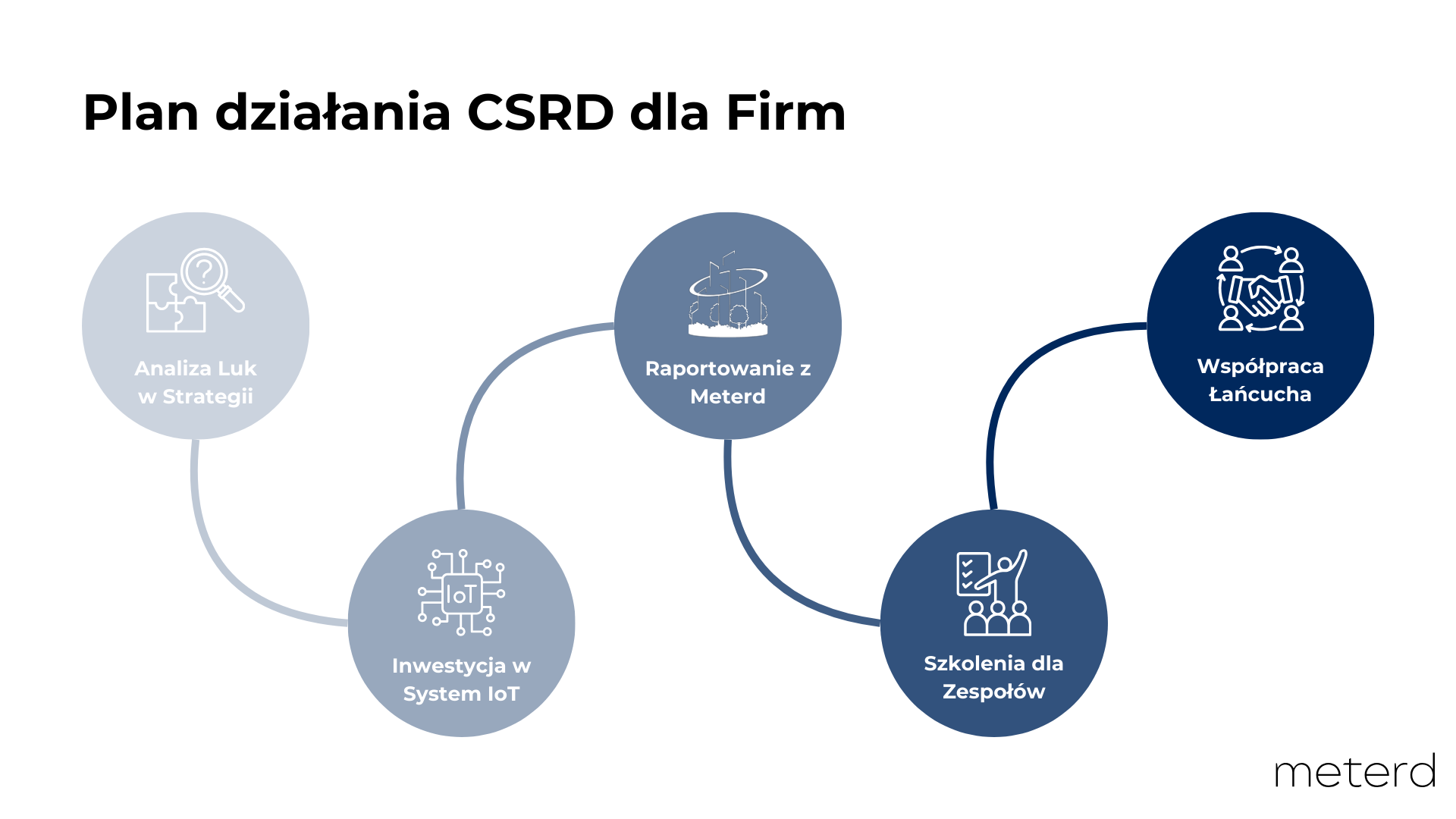
- Conduct a strategic sustainability gap analysis
- Invest in IoT systems for precise data collection
- Ask Meterd's engineers to organize the data for reporting
- Train teams on ESG metrics and double materiality analysis
- Collaborate with partners in your supply chain to obtain Scope 3 emissions data and, if you are a smaller supplier, prepare your data in the VSME format
7. How Will Meterd Help You with CSRD Reporting?
Reporting rules keep shifting, while the energy data behind them stays the same. Our engineers meter your buildings, watch them every day and report in plain numbers, so the figures that go into your sustainability report are the same ones that guide your savings.
Beyond meeting CSRD requirements, this simplifies facility management, improves the return on your investments and speeds up your company's energy transformation, while operating costs come down.
8. Additional Information Resources
- The Omnibus I Directive (Official Journal of the EU, February 2026)
- The "stop-the-clock" directive (Official Journal of the EU, April 2025)
- EFRAG website (efrag.org)
- EFRAG simplified ESRS (December 2025)
- EFRAG guide on voluntary SME reporting (VSME)
- EU Corporate Reporting
- KPMG - Introduction to CSRD Reporting
- Deloitte's Guide to CSRD and ESRS